

Here’s how (and why) to tamp down inflammation in your body. It’s imperative for preserving your health — and for protecting the health of those who will come after you, too.
Inflammation: a silent killer. When the body’s protective inflammatory response turns from acute to chronic, it can become deadly. Chronic inflammation, a confusion and miswiring that causes the body to attack its own cells by mistake, is a major health threat, contributing to more than 50 percent of deaths worldwide.1 In fact, some of the leading causes of death, including cardiovascular disease, type 2 diabetes, cancer and even Alzheimer’s disease, can be attributed to systemic chronic inflammation. Other diseases such as rheumatoid arthritis, non-alcoholic fatty liver disease, chronic kidney disease, osteoporosis, sarcopenia (loss of lean muscle), depression and asthma are also linked to inflammation.
While the deepest biological mechanisms, causes and progression of systemic chronic inflammation aren’t yet fully understood, mitigation strategies that combat it are well-established. Improved diet, moderate exercise, reduced visceral fat, stress reduction, smoking cessation and improved sleep can all have profound effects.
Acute Versus Chronic Inflammation
While the causes and symptoms of acute inflammation are easily recognizable, the insidious persistence of chronic inflammation is less so.
Acute inflammation is a temporary response to sudden damage such as a splinter that causes swelling or bruising. Acute inflammation may also lead to temporary difficulty moving the affected area such as the challenge of walking on a twisted ankle. A well-functioning immune system is at play in acute inflammation, protecting the injury as it releases inflammatory mediators. The hormone histamine and others prompt blood vessel dilation, which allows more blood and immune cells to reach the injured area. Redness and swelling result, as well as heat, as agitated nerve endings send pain signals to the brain. Most often, acute inflammation goes away on its own within a few days, often without the need for medical intervention beyond ice, an over-the-counter pain reliever and maybe a bandage wrap.
With chronic inflammation, however, inflammatory signals are prompted without illness or injury. Chronic inflammation causes a breakdown of immune function and alters tissues, organs and cells, which increases susceptibility to infection, tumors and, as we saw during the COVID-19 pandemic, can possibly lead to a poor vaccine response. Those with systemic chronic inflammation may feel discomfort for any number of reasons such as chronic joint pain from rheumatoid arthritis, fatigue from lupus, skin discomfort from conditions such as psoriasis, chest and abdominal pain or even neurodegenerative conditions. Diseases brought about by chronic inflammation don’t go away without intervention and can be serious and debilitating when left untreated.
Early Exposure
While chronic inflammation becomes more prevalent as one ages, it can nevertheless have serious and potentially lifelong consequences when experienced as a young person, including in utero. It can also be passed down from one generation to another, first to one’s own offspring and then on to their offspring’s offspring, as epigenetic modifications can make a person more prone to suffer from inflammation-related diseases.1
Causes of Chronic Inflammation
Regardless of one’s age, systemic chronic inflammation is more prevalent in Westernized countries. In fact, the higher a country’s national income, the higher the prevalence of chronic inflammatory disease. Nonheritable social, environmental and lifestyle factors are significant contributors.1
Lack of physical activity, high levels of visceral fat and diets high in processed foods, refined carbohydrates and oils are all causes of chronic inflammation, as are diets low in fruits, vegetables and fiber. Chronic stress, exposure to toxic chemicals such as tobacco, poor gut health, too much alcohol, too much stress and too little sleep can also play a role in both onset and ongoing systemic chronic inflammation.
Chronic infections and autoimmune diseases may as well be contributors.
Diseases brought about by chronic inflammation don’t go away without intervention and can be serious and debilitating when left untreated.
The Fix
First, a blood test measuring C-reactive protein, a marker signaling inflammation, is a highly regarded first-line test for measuring one’s inflammation levels. The test can be ordered from a healthcare provider.
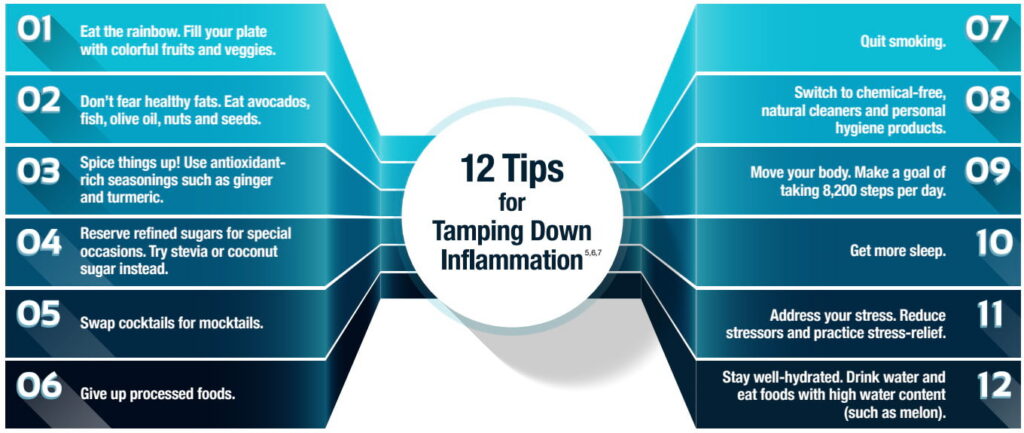
Next, there are numerous lifestyle choices that can help reduce the incidence and effects of chronic inflammation. Thankfully, these lifestyle choices also contribute to improved health outcomes for many other conditions and diseases. While this list is not exhaustive, these modifications are some of the easiest to implement:
Moderate physical activity. Participation in regular, moderate physical activity, a minimum of 150 minutes weekly, can reduce inflammation by strengthening the body’s antioxidative capacity. Muscle is an endocrine organ. This means that muscle produces and releases cytokines with each contraction.
Moving from no activity at all to moderate activity for 150 minutes per week may reduce cardiovascular mortality by as much as 23 percent. Additionally, those who meet the minimum physical activity recommendations may also be able to reduce the risk of Alzheimer’s disease by as much as 40 percent.1 Regular, moderate intensity exercise as part of a healthy lifestyle is often recommended to counter low-grade chronic inflammation.
Some may question the controversy over physical activity’s role in increasing inflammation. This stems from risks that may be associated with very vigorous, high-intensity exercise. But researchers aren’t yet sure if this controversy is based on fact, and if it is, why the phenomenon might even occur. One theory, however, is that when the immune function is stressed to the limit, the body’s ability to maintain homeostasis is hampered, increasing inflammation and reducing the body’s ability to defend itself against infections.2
So, how much activity and at what intensity is considered moderate? The answer depends on the individual, his or her health history and history with exercise. Working with a physical trainer after receiving a doctor’s approval is an important step in determining a physical activity focus. The Centers for Disease Control and Prevention, the American Heart Association and other reputable organizations also provide good basic information for getting started.
Anti-inflammatory foods. Anti-inflammatory diets are a powerful inflammation fighting tool. They are built around antioxidant-rich foods. Choosing fruits and vegetables in a rainbow of colors, including cruciferous vegetables, whole grains, plant-based proteins and spices such as turmeric, ginger and garlic can all help to influence an anti-inflammatory state. Numerous studies reference the Mediterranean diet as an example of an anti-inflammatory eating plan.
On the other hand, diets low in fruits, vegetables and fiber and high in processed foods, processed meats, salt and saturated fats and oils lead to oxidative stress and contribute to chronic inflammation. Weight gain, a common consequence of the Western diet, also contributes to inflammation. However, even when factoring for obesity, diet plays a major role in combating inflammation regardless of 1
As anti-inflammatory foods are added to the diet, fried foods, refined carbohydrates, sugar-sweetened beverages, processed meats and foods made with shortening, lard and margarine should also be eliminated.3 Partnering with a board-certified dietician or nutritionist can help you to determine the right eating plan for your needs and ensure you get all necessary nutrients.
Reduce visceral fat. Visceral adipose tissue (VAT) is well- known as a significant risk factor for both inflammation and many inflammatory conditions.1 Like muscle, VAT is an endocrine organ and is comprised of many types of cells, including immune cells. As VAT increases, pro-inflammatory molecules are secreted and the cascading effect includes reduced T cells, B cells, natural killer cells and others, all of which amplify inflammation.
While these effects are problematic throughout life, increased rates of childhood obesity in particular may lead to an epidemic of lifelong health struggles brought on by increased inflammatory response and contributing disease risks.1
Fortunately, moderate exercise and improving one’s diet work in tandem to reduce VAT. Working with healthcare professionals who are trained in lifestyle modifications of exercise and diet can help.
Manage stress. Chronically elevated stress levels are a major health threat leading to systemic chronic inflammation. Even stress experienced early in life, including in utero, can alter the immune system with lasting consequences. Abuse, low socioeconomic environments and a lack of nutrient-rich foods as the immune system is developing are contributors. Even paternal and maternal stress prior to conception threaten immune system development due to epigenetic changes passed on to children.
Psychological stress, family, disease management, chronic pain and perceived lack of personal control can all fuel inflammatory responses that may lead to lasting physiologic changes.
Although managing stress can be difficult, it is necessary. Whether practicing deep breathing, getting regular exercise, taking time for oneself or speaking with a professional counselor, finding ways to manage stress and interact with stressors in a more positive way can be done. Stress management may not be easily measurable, but physiological changes one may notice with regular stress reduction efforts include reduced heart palpitations, lower blood pressure and a more natural ability to substitute healthy behaviors (deep breathing) for an unhealthy one (reaching for a cigarette) as a coping mechanism.
Reduce exposure to toxins. In addition to causing numerous health concerns and diseases, cigarette smoke is also known to increase inBammation. Across the healthcare spectrum, the recommendation is to eliminate tobacco products.
Further, the potential link between exposure to other environmental toxins and increased inBammation is also being explored. Since 2008, the National Toxicology Program and National Center for Advancing Translational Sciences, both part of the National Institutes of Health, as well as the Food and Drug Administration and the EPA’s Center for Computational Toxicology and Exposure, have been evaluating the potential toxicity of various chemicals found in foods, pharmaceuticals, household chemicals and personal care products4 on the immune system and whether they alter molecular pathways in ways that increase inBammation and, in turn, disease risk.
Regardless of one’s age, systemic chronic inflammation is more prevalent in Westernized countries.
Long-Term Outcomes
Unfortunately, as knowledge about the negative health outcomes associated with inBammation grows, so too does the incidence of inBammatory disease. As the cumulative epigenetic changes spurned by inBammation are brought to light, finding effective and manageable solutions is particularly important to help keep inBammatory responses in check.
Although there are numerous mitigation strategies for reducing systemic chronic inBammation, five interconnected health strategies of moderate exercise, an anti-inBammatory diet, reducing visceral fat, managing stress and eliminating cigarettes and exposure to other potential toxins can independently and collectively bring about improved health outcomes.
Fighting inBammation isn’t necessarily easy, but it is well worth the effort, not just for the here and now, but for generations to come.
References
- Furman, D, Campisi, J, Verdin, E, et Chronic Inflammation in the Etiology of Disease Across the Life Span. Nature Medicine, 2019 Dec; 25:1822-1832. Accessed at www.nature.com/articles/s41591-019-0675-0.
- Scheffer, DDL, and Latini, A. Exercise-Induced Immune Response: Anti-Inflammatory Status on Peripheral and Central Organs. Biochimica et Biophysica Acta. Molecular Basis of Disease, 2020 Oct;1886(10):165823. Accessed at ncbi.nlm.nih.gov/pmc/articles/PMC7188661.
- Mayo Health Clinic. Want to Ease Chronic Inflammation? Start with Your Grocery List, Oct. 14, 2021. Accessed at mayoclinichealthsystem.org/hometown-health/speaking-of-health/want-to-ease-chronic-inflammation.
- National Institutes of Health. Tox21: Toxicology Testing in the 21st Century Fact Sheet. National Toxicology Accessed at www.niehs.nih.gov/health/materials/tox21_508.pdf.
- Filemon, JM. The Fastest Ways to Reduce Inflammation. EatingWell, June 6, 2023. Accessed at www.eatingwell.com/article/7908639/the-fastest-way-to-reduce-inflammation.
- Letorney, A. Inflammation Is Behind Everything From Erectile Dysfunction to Heart Disease. Here’s How to Reduce It Fast, Oct. 21, 2022. Accessed at honehealth.com/edge/health/how-to-reduce-inflammation-in-the-body-fast.
- Berman, Walking 8,200 Steps a Day May Lower Your Risk of Chronic Disease, Study Finds. Medical News Today, Oct. 20, 2022. Accessed at www.medicalnewstoday.com/articles/walking-8200-steps-a-day-may-lower-your-risk-of-chronic-disease-study-finds.